하회별신굿은 하회마을 수호 여신을 위한 큰 마을 굿으로, 10년에 한 번쯤만 열렸다.
굿은 신을 부르는 한국의 의례다. 마을 사람들은 해마다 정월대보름에 마을 당에서 간단한 제사(동제)를 지냈다. 별신굿은 그와 다른 '특별한' 굿으로, 10년(때로는 5년)에 한 번, 또는 여신이 원한다고 믿을 때 크게 벌인 축제였다. 공연배우는 모두 남자 마을 서민 남자들이다. 여하회탈 옛 원본은 국보라 박물관에 있다. 공연에는 복제품을 쓴다.
누구를 위한 굿인가?
마을 뒤 언덕 화산에 있는 서낭당의 수호 여신이다. 전설에 따르면 17세 의성 김씨 처녀다. 목적은 단순했다. 여신을 기쁘게 해서, 마을을 병과 불에서 지켜 주고 풍년이 들게 하는 것이다.
음력 설 무렵 약 2주 동안 열렸다. 산주가 서낭당에서 방울 단 긴 장대(서낭대)로 여신을 내려받았다. 광대들은 그 서낭대를 모시고 마을로 내려와 날마다 탈을 쓰고 놀았다. 마을 회관(동사) 마당과 큰 양반 집 마당에서였다. 정월대보름에는 여신을 다시 서낭당으로 모셔 올렸다.
굿인데 왜 그렇게 웃긴가?
탈놀이는 윗사람들을 놀린다. 양반과 선비가 하찮은 것을 두고 다투고, 승려는 계율을 어긴다. 양반 마을에서 이런 놀이를 했다는 게 이상해 보이지만, 양반들은 이를 허락했고 비용까지 댔다. 그 2주 동안 서민은 평소에 못 하던 말을 대놓고 할 수 있었다. 놀이가 끝나면 엄격한 신분 질서가 다시 돌아왔다.
지금은 어떻게 되었나?
진짜 별신굿은 1928년이 마지막이다. 그 뒤 끊겼지만, 마을 사람들에게서 받아 적은 대사가 남아 있었고, 보존회가 탈놀이를 공연으로 되살렸다. 지금은 국가무형유산이고, 2022년부터 한국 탈춤의 하나로 유네스코 인류무형문화유산 목록에 올라 있다. 마을 입구 공연장에서 화~일요일 오후 2시에 무료로 볼 수 있다.
The Hahoe Byeolsingut was a big village ritual for Hahoe's guardian goddess, held only once every 10 years or so. The famous Hahoe mask dance was one part of it.
What does the name mean?
Gut is a Korean ritual to call on the gods. Every year, at the first full moon of the lunar year, the villagers held a simple rite at their shrines. The byeolsin-gut was the "special" one — a much bigger festival held every 10 years (sometimes 5), or whenever the villagers believed the goddess had asked for it.
Who was it for?
The guardian goddess of the shrine on Hwasan, the hill behind the village. Legend says she was a 17-year-old girl from the Uiseong Kim family. The goal was simple: keep her happy, so she'd keep the village safe from sickness and fire and bring a good harvest.
How did it work?
It ran for about two weeks over the lunar New Year. The ritual leader called the goddess down at her shrine into a tall pole with a bell. The performers carried that pole into the village, then danced in masks every day — in the village hall yard and in the yards of the big noble houses. On the first full moon, they took the goddess back up to her shrine.
Why was a ritual so funny?
The mask dance mocks the people at the top — a nobleman and a scholar fighting over a silly prize, a monk who breaks his vows. It sounds strange in a nobles' village, but the nobles allowed it, and even paid for it. For those two weeks, commoners could say out loud what they couldn't say the rest of the year. When it ended, the strict class order came back.
Where is it now?
The last real byeolsingut was held in 1928. After that it stopped, but villagers had written down the dialogue, and a preservation group revived the mask dance as a performance. Today it's a national intangible heritage, part of Korea's mask dance tradition on UNESCO's list since 2022.
Who played the parts? Village commoners, all men — even the female roles.
Are the masks in the show the real ones? No. The old originals are national treasures, kept in a museum. The performers use replicas.
Why did it stop in 1928? Most likely because of Japanese colonial rule and changing village life (추측)
12세기 중반 고려시대(918~1392) 한국에서 가장 흥미롭고 반항적인 전통 중 하나인 하회별신굿탈놀이다. 엄격한 신분제 사회의 가장 밑바닥에서 평민들은 부유한 귀족들과 깐깐한 종교 지도자들에게 끊임없이 억압받았다. 이로 인한 스트레스가 엄청났다. 실제 피비린내 나는 폭동이 일어나는 것을 막기 위한 역할을 했다. 평민들은 나무 가면을 써서 정체를 숨김으로써 지배층을 대놓고 조롱할 수 있는 공식적인 기회를 얻었다. 이 의식은 억눌린 농민들의 분노를 달래고 마을의 수호신을 기쁘게 했기 때문에 결과적으로 마을의 화합을 유지하고 재앙을 막을 수 있었다.
축제의 진행 과정은 다음과 같다.
1. 수호신 맞이하기 (강신 및 무동)
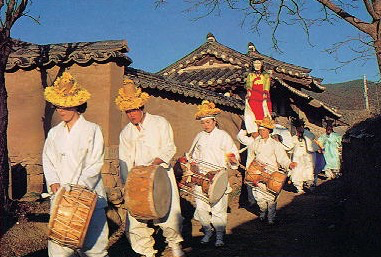
- 목적: 마을의 수호신(서낭신)의 축복 없이는 축제를 시작할 수 없다.
- 내용: 마을 사람들이 뒷산에 있는 서낭당으로 올라간다. 여신의 영혼을 상징하는 한 젊은이가 건장한 남자의 목마를 타고 춤을 춘다. 이는 신이 축제를 지켜보기 위해 인간 세계로 무사히 내려왔음을 의미한다.
2. 무대 정화하기 (주지)
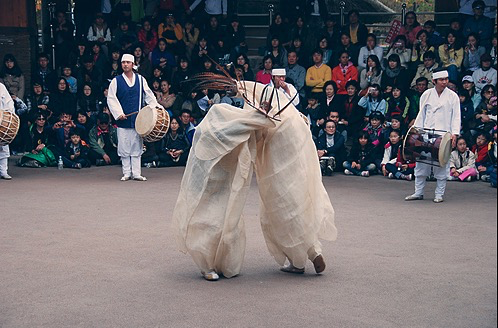
- 목적: 본격적인 코미디와 풍자가 시작되기 전에 공연장을 영적으로 정화해야 한다.
- 내용: '주지'라는 신화 속 동물(보통 사자로 해석됨) 두 마리가 무대에 등장한다. 이들은 마을의 추수를 망칠 수 있는 악귀나 액운을 겁주고 잡아먹기 위해 입을 크게 쩍쩍 벌리며 공격적으로 춤을 춘다.
3. 충격적인 백정

- 목적: 인간 생존의 날것 그대로의 현실을 보여주고 상류층의 위선적인 탐욕을 조롱하기 위함이다.
- 내용: 백정이 무대 위에서 소를 잔인하게 도축하는 시늉을 한다. 그리고 아주 충격적이고 코믹하게도 소의 고환을 잘라내어 남성 정력에 특효약이라며 관객들에게 강제로 팔려고 한다. 관객들은 자신들의 숨겨진 저급한 욕망을 들킨 것 같아 웃을 수밖에 없게 된다.
4. 슬픈 늙은 과부 (할미)
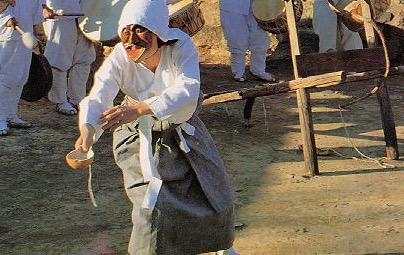
- 목적: 코미디에서 비극으로 분위기가 갑자기 바뀌며, 극심한 빈곤이 하층민 여성에게 미치는 잔인한 인과관계를 보여준다.
- 내용: 가난한 늙은 과부가 베틀에 앉아 있다. 육체적으로 지쳐가며 베를 짜는 동안, 평생의 굶주림, 비극적인 운명, 그리고 세상의 가혹함에 대한 구슬프고 슬픈 노래를 부른다. 농민들에 대한 깊은 연민을 느끼게 하는 순간이다.
5. 타락한 승려 (파계승)

- 목적: 고려 시대 불교 엘리트들의 종교적 부패와 위선을 신랄하게 공격하기 위함이다.
- 내용: 순수하고 금욕적이어야 할 승려가 '부네'라는 젊고 요염한 여성에게 완전히 마음을 뺏긴다. 그녀가 쭈그리고 앉아 소변을 보자, 정욕에 휩싸인 승려는 그녀가 소변을 본 흙을 움켜쥐고 냄새까지 맡는다. 결국 종교적인 맹세를 완전히 버리고 그녀와 함께 야반도주한다.
6. 어리석은 귀족들 (양반과 선비)
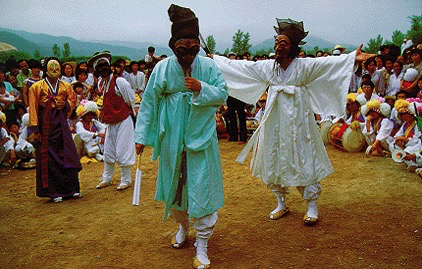
- 목적: 풍자의 절정이다. 교육받은 지배층의 고상한 환상을 완전히 박살 낸다.
- 내용: 귀족(양반)과 학자(선비)가 무대에 거드름을 피우며 등장해 자신들의 뼈대 있는 가문과 한학 지식을 치열하게 자랑한다. 하지만 백정이 소의 고환을 들고 나타나자 그들의 고상한 척하는 모습은 순식간에 무너진다. 이 두 고귀한 남자는 누가 정력에 좋은 고환을 먹을 것인지를 두고 한심한 육탄전을 벌인다. 그 와중에 건방진 하인(초랭이)은 그들 뒤에서 펄쩍펄쩍 뛰며 주인의 멍청함을 조롱한다.
외국인 관광객들이 많이 하는 질문 중 하나는 이것이다. "권력 있는 귀족들이 평민들이 대놓고 조롱하는데도 왜 벌하지 않았는가?"
여기에 숨겨진 진실이 있다. 이 축제에 자금을 지원한 사람들은 바로 귀족들이었다. 귀족들은 인간 심리의 인과관계를 잘 알고 있었다. 그들은 평민들이 몇 년에 한 번씩 가면이라는 안전망 뒤에 숨어 극심한 분노를 표출하도록 허락하지 않으면, 결국 진짜 농기구를 들고 피비린내 나는 폭동을 일으킬 것이라는 걸 알고 있었다. 자신들이 조롱거리가 되는 코미디 쇼를 후원하는 것은 귀족들이 자신의 목숨을 지키기 위해 가입한 가장 싸고 안전한 생명 보험이었다.
[요약버전]
- 배경: 고려시대 지배층의 억압 속에서 평민들의 불만을 해소하기 위한 '압력 밥솥' 역할이다. 폭동을 예방하는 효과가 있었다.
- 1. 강신/무동: 서낭신 축복이다. 젊은이가 무동을 타고 춤을 추며 신이 내려왔음을 알린다.
- 2. 주지: 무대 정화 목적이다. 사자 닮은 괴물 두 마리가 악귀와 액운을 쫓아낸다.
- 3. 백정: 상류층 위선 조롱이다. 소 고환을 정력제라며 파는 시늉을 하여 인간의 원초적 욕망을 꼬집는다.
- 4. 할미: 하층민의 비애다. 가난한 과부가 베를 짜며 신세 한탄 노래를 부른다. 빈곤의 참혹한 결과를 보여준다.
- 5. 파계승: 종교 부패 비판이다. 금욕적인 승려가 부네의 소변 본 흙 냄새를 맡고 정욕에 눈이 멀어 도망간다.
- 6. 양반/선비: 지배층 조롱이다. 학식을 자랑하던 양반과 선비가 소 고환(정력제)을 차지하려고 개싸움을 벌인다. 하인(초랭이)이 뒤에서 조롱한다.
During this era, commoners experienced severe stress because the ruling nobles and monks controlled them strictly. If the commoners could not release this stress, they would eventually start a physical rebellion. To prevent this, the ruling class permitted this mask dance. Commoners wore wooden masks to hide their faces. Because their identities were hidden, they could openly criticize the nobles without punishment. This festival released the commoners' anger and prevented actual riots.
The progress of the festival is as follows.
1. Welcoming the Guardian Spirit (Gangshin & Mudong)
- The Cause and Effect: The festival requires permission from the village goddess. Villagers go up the mountain to her shrine. A young person, representing the goddess, rides on a man's shoulders and dances. This action indicates that the goddess has descended to the village to observe the festival.
2. Cleansing the Stage (Juji)
- The Cause and Effect: The stage must be cleared of bad luck before the main performance begins. Two dancers wearing monster masks enter the stage. They open and close the wooden mouths of the masks. This action drives away evil spirits that could ruin the village's harvest.
3. The Butcher (Baekjeong)
- The Cause and Effect: This stage criticizes human greed. A butcher slaughters a prop cow on stage. He cuts off the cow's testicles and offers them to the audience, stating they improve male energy. This forces the audience to confront their own hidden desires.
4. The Old Widow (Halmi)
- The Cause and Effect: This stage shows the reality of the lower class. A poor widow weaves cloth on a loom. She sings a song about her poverty and hunger. It directly displays the physical and mental results of extreme poverty.
5. The Corrupt Monk (Pagyeseung)
- The Cause and Effect: This scene criticizes the corruption of religious leaders. A Buddhist monk observes a young woman urinating. He smells the dirt where she urinated. He then abandons his religious vows and leaves with her. It exposes the hypocrisy of the monks during that era.
6. The Nobles (Yangban & Seonbi)
- The Cause and Effect: Two educated nobles enter the stage. They boast about their social status and academic knowledge. When the butcher brings the cow's testicles, the two nobles physically fight each other on the ground to eat them for male energy. Their servant mocks them from behind. This destroys the dignified image of the ruling class.
The nobles actually funded this festival. They understood human psychology. They knew that if the commoners did not release their anger, they would start an armed rebellion. By paying for a performance that criticized them, the nobles prevented actual violence. It was a practical method to protect their own lives and maintain social order.
- Background: A practical method to release the oppressed commoners' anger. It prevented actual riots.
- 1. Gangshin & Mudong: A young person dances on shoulders to announce the goddess has descended.
- 2. Juji: Two monsters drive away evil spirits to cleanse the stage.
- 3. Baekjeong: Offers cow testicles for male energy, forcing people to confront human greed.
- 4. Halmi: A poor widow sings, showing the extreme poverty of the lower class.
- 5. Pagyeseung: A monk smells a woman's urine and leaves, exposing religious hypocrisy.
- 6. Yangban & Seonbi: Nobles fight on the floor for male energy medicine, destroying the ruling class's dignity.
- Cause-and-Effect Secret: Nobles funded the festival. It was a measure to prevent violence and protect their own lives.
'Korean History > 문화예술' 카테고리의 다른 글
| 경주 APEC (0) | 2026.03.11 |
|---|---|
| 선비정신은 무엇인가? (0) | 2026.03.08 |
| 열녀비가 세워진 이유 : 열녀사상 역사적 배경 알아보기 (0) | 2025.05.22 |
| 한중일 젓가락 문화 : 한국 젓가락만 쇠로 만든 이유 (0) | 2025.02.18 |
| 아리랑(Arirang) 기원과 역사 : 한을 담은 한국의 노래 (Arirang: The Song of Han) (1) | 2025.02.14 |

